
The digital landscape shifts at a dizzying pace. Every single day, groundbreaking technologies emerge, altering how businesses operate and how individuals connect. Navigating this vast ecosystem requires a reliable compass. This is exactly where Techloomz com steps into the spotlight. As a premier hub for digital transformation, software engineering, and consumer tech insights, this platform weaves together complex concepts into accessible, actionable knowledge.
Whether you are an enterprise leader seeking to optimize your cloud infrastructure or a curious enthusiast tracking the evolution of artificial intelligence, understanding the digital thread is essential. The modern world relies heavily on interconnected platforms, agile frameworks, and robust development ecosystems. By tracking these shifts, professionals can stay ahead of the curve, anticipating disruptions rather than merely reacting to them. Let us dive deep into the core tech pillars shaping our current era.
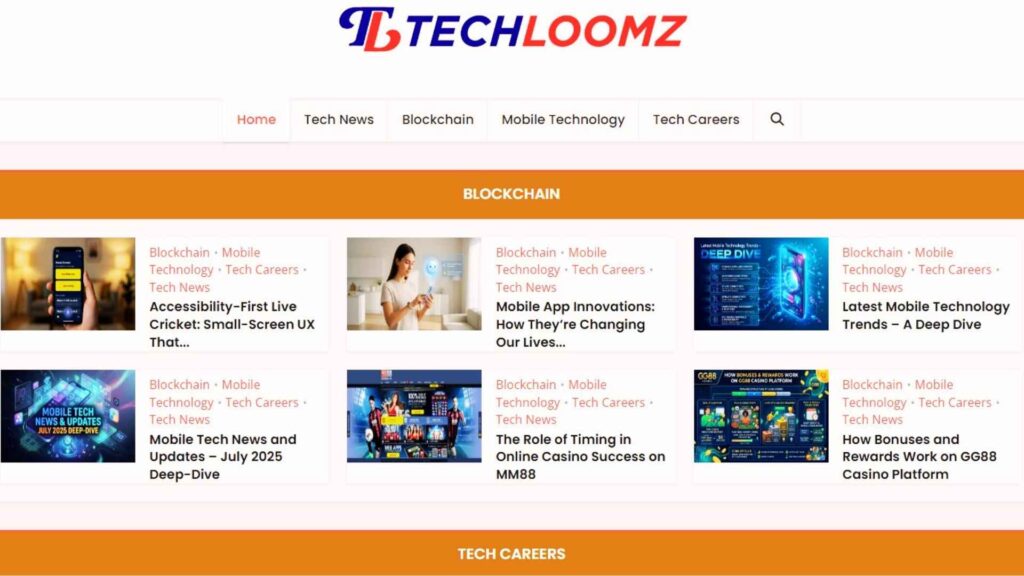
Exploring the Core Ecosystem of Techloomz com
Techloomz com serves as a foundational ecosystem designed to analyze, demystify, and forecast the trajectory of the tech sector. To fully understand why this platform is becoming an essential resource, one must examine the specific technological domains it covers. From software methodologies to hardware breakthroughs, the overarching goal remains clear: bridge the gap between technical complexity and practical execution.
The Role of Artificial Intelligence in Enterprise Environments
Artificial intelligence is no longer a futuristic concept confined to research laboratories. Today, it forms the backbone of modern business automation. Through machine learning algorithms, predictive analytics, and natural language processing, companies can now process massive datasets in milliseconds. This enables smarter decision-making, hyper-personalized customer experiences, and unprecedented operational efficiency.
Cloud Computing and Scalable Infrastructure Architecture
As data demands grow, traditional physical servers continue to take a back seat. Modern businesses prioritize flexibility, data redundancy, and global accessibility. Cloud infrastructure providers offer scalable solutions that allow startups to deploy applications globally without massive upfront capital investments. Managing these environments requires a deep understanding of hybrid cloud models, containerization, and automated deployment pipelines.
Cyber Security Frameworks in an Interconnected World
With increased connectivity comes heightened vulnerability. Cyber threats have grown more sophisticated, targeting critical software supply chains and sensitive user data. Establishing a zero-trust architecture is no longer optional. Organizations must implement end-to-end encryption, multi-factor authentication, and continuous monitoring systems to safeguard their digital assets against malicious actors.
How Digital Branding and Tech Integration Drive Modern Growth
True digital success requires more than just launching an advanced application or setting up a secure cloud network. For any tech venture or online entity to thrive, technical infrastructure must merge seamlessly with a powerful, recognizable brand identity.
The Convergence of Advanced Tech and Strategic Creative Design
When a company builds a robust platform on Techloomz com, it simultaneously needs to establish a strong market presence to reach its target audience effectively. Technology handles the functionality, scalability, and performance, while branding manages communication, user trust, and market positioning.
To bridge this gap seamlessly, many growing tech platforms look toward expert production partners. For instance, teams looking to scale their digital narrative can leverage the production expertise of Podbrandstudio, ensuring their audio, visual, and technical content matches the high standards expected by a modern digital audience.
When high-level development meets professional brand execution, a business transitions from a simple utility to an industry authority. This dual focus is exactly what separates temporary market trends from sustainable digital enterprises.
Human-Centered Design in Technical Products
User interface and user experience design act as the primary bridge between a human user and complex codebases. A product can possess the most advanced backend algorithms in the world, but if the frontend interface remains confusing, adoption rates will plunge. Human-centered design focuses on intuition, accessibility, and frictionless navigation paths.
Omnichannel Content Strategies for Technical Audiences
Marketing tech to a technically literate audience requires a nuanced approach. Conventional high-level marketing buzzwords often fail to convert developers, engineers, and tech executives. Instead, brands must focus on high-quality, informational content marketing. This includes detailed whitepapers, clear documentation, comprehensive case studies, and engaging multimedia content that proves immediate utility.
The Evolution of Software Engineering Methodologies
Building software is an intricate craft that has evolved significantly over the past few decades. The transition from rigid structures to flexible, iterative frameworks has revolutionized product delivery timelines and overall software quality.
Agile Development and continuous Integration Pipelines
The traditional waterfall model often led to prolonged development cycles and products that were obsolete upon release. Agile methodologies shifted the focus toward continuous feedback, cross-functional collaboration, and short, impactful development sprints. Coupled with Continuous Integration and Continuous Deployment pipelines, engineering teams can now push updates, patches, and new features to live production environments multiple times a day with minimal disruption.
You Can Also Read: techypure
The Rise of Low-Code and No-Code Development Platforms
An interesting shift is occurring within the development landscape. Low-code and no-code platforms are democratizing software creation. While complex, highly specialized applications will always require custom programming languages, these visual development tools allow business analysts and non-technical founders to rapidly prototype ideas, build internal tools, and launch minimum viable products in record time.
Next-Generation Hardware and the Internet of Things
Software requires powerful, efficient hardware to achieve its full potential. The physical components powering our digital world are undergoing an architectural renaissance, unlocking capabilities that were previously mathematically impossible.
Edge Computing and Real-Time Data Processing
While cloud computing centralizes data storage and processing in massive remote data centers, certain applications require localized immediacy. Autonomous vehicles, industrial robotics, and smart medical devices cannot afford the latency of sending data across the globe for a response. Edge computing solves this by processing critical data directly on or near the physical device, cutting down latency to near-zero levels.
The Smart Infrastructure of Modern Smart Cities
The Internet of Things connects billions of physical devices to the internet, creating a web of continuous data exchange. When applied on a macroeconomic scale, this connectivity transforms traditional urban areas into highly responsive smart cities. Automated traffic management systems, intelligent energy grids, and connected public transportation networks utilize real-time sensor data to optimize resources, reduce carbon footprints, and improve urban living conditions.
Data Analytics: Turning Raw Information into Business Intelligence
In the digital era, data is often compared to crude oil. It holds immense potential value, but it remains largely useless until it is extracted, refined, and converted into an actionable resource.
Big Data Architecture and Distributed Computing
The sheer volume of data generated by internet users, IoT sensors, and corporate transactions is staggering. Traditional database systems crumble under this weight. Modern data architectures rely on distributed computing frameworks to store and process petabytes of information simultaneously. This structure allows enterprises to run complex queries across disparate data pools without crashing their operational systems.
Predictive Modeling and Behavioral Analytics
By applying historical data sets to advanced statistical models, data scientists can forecast future market trends, customer behaviors, and operational risks with remarkable accuracy. E-commerce giants use these models to anticipate inventory demands, financial institutions deploy them to detect fraudulent transactions in real time, and content networks rely on them to keep users engaged through precise recommendation algorithms.
The Strategic Importance of Search Engine Optimization for Tech Platforms
An incredible platform or a revolutionary piece of tech loses its value if nobody can find it. Search Engine Optimization remains the most cost-effective method for driving sustainable, high-intent traffic to digital assets like Techloomz com.
Semantic Search and Search Intent Optimization
Search engines have evolved past simple keyword matching. Modern algorithms utilize semantic search, meaning they analyze the context, intent, and relationship between words in a user query. To rank effectively, content creators must focus on comprehensive topic coverage, answering user questions directly, and organizing information logically through hierarchical header tag formatting.
Technical SEO and Website Performance Dynamics
On-page content is only half the battle. Technical SEO ensures that search engine crawlers can easily access, index, and understand a website. Key technical performance indicators include fast page-loading speeds, mobile-responsive layouts, secure connections via HTTPS, and clean site architecture devoid of broken links or confusing redirect loops.
The Future Blueprint of Digital Ecosystems
As we peer into the horizon, several foundational shifts promise to redefine the technological landscape entirely. Organizations that prepare for these disruptions today will lead the markets of tomorrow.
Decentralized Web Architectures and Blockchain Utility
Beyond cryptocurrency speculation, blockchain technology offers deep utility in data integrity, decentralized storage, and cryptographic security. Future web developments lean heavily toward decentralized architectures where users retain ownership of their personal information, reducing reliance on massive centralized tech monopolies.
Quantum Computing and the Next Computational Leap
Traditional computers process data using binary bits representing zeroes or ones. Quantum computers leverage quantum mechanics to process complex variables simultaneously. While still in its developmental infancy, quantum computing will eventually solve mathematical problems that would take standard supercomputers thousands of years to compute, transforming fields like cryptography, molecular modeling, and system optimization.
Frequently Asked Questions
What is the primary focus of Techloomz com?
Techloomz com is dedicated to delivering highly relevant, comprehensive insights, guides, and updates on enterprise technology, software engineering practices, cyber security strategies, and emerging digital trends.
Why is technical SEO important for modern websites?
Technical SEO ensures that your website meets the performance and accessibility standards set by modern search engines. This includes fast load speeds, secure connections, mobile responsiveness, and clean code structures, all of which directly improve organic search rankings.
How do agile development practices benefit business growth?
Agile methodologies allow development teams to build software iteratively, breaking projects down into smaller sprints. This allows businesses to adapt rapidly to changing market conditions, gather user feedback early, and deploy stable product features continuously.
What is the advantage of using edge computing over cloud computing?
Edge computing processes data locally on the device or a nearby server instead of routing it to a centralized cloud data center. This drastically reduces latency, making it ideal for time-sensitive applications like autonomous driving, robotics, and instant healthcare monitoring.
How does branding influence the success of a technology product?
Branding establishes trust, builds emotional connections, and differentiates a product in a crowded market. Even the most advanced software needs a clear identity and strategic communication to resonate with users and build long-term loyalty.